Head to head · specs cited · drawn to scale
Nikon Z5 II vs Sony A7 III
Every spec below is quoted from the makers' official pages — where a figure isn't published we say so rather than guess. Sizes are drawn at true relative scale from published dimensions, and the bag-fit row is computed against our measured bag catalog.
The 3 biggest published differences
- EVF resolution: the A7 III leads at 2,359,296 dots vs the Z5 II's 0.5-in. (1.27-cm), approx. 3690k-dot OLED.
- Battery life (CIPA): the A7 III leads at Approx. 610 shots (Viewfinder) / approx. 710 shots (LCD monitor) (CIPA standard) vs the Z5 II's Approx. 330 shots (viewfinder, energy saving off); approx. 350 shots (monitor, energy saving off); up to 380/390 with energy saving on.
- Burst — mechanical: the A7 III leads at 10 fps (Hi+) vs the Z5 II's Approx. 7.8 fps.
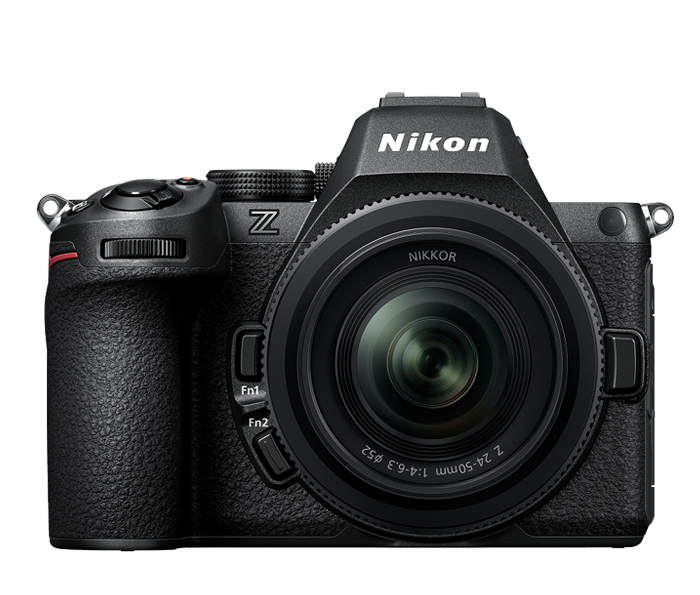 Z5 II Nikon Z Z5 II Nikon Z | 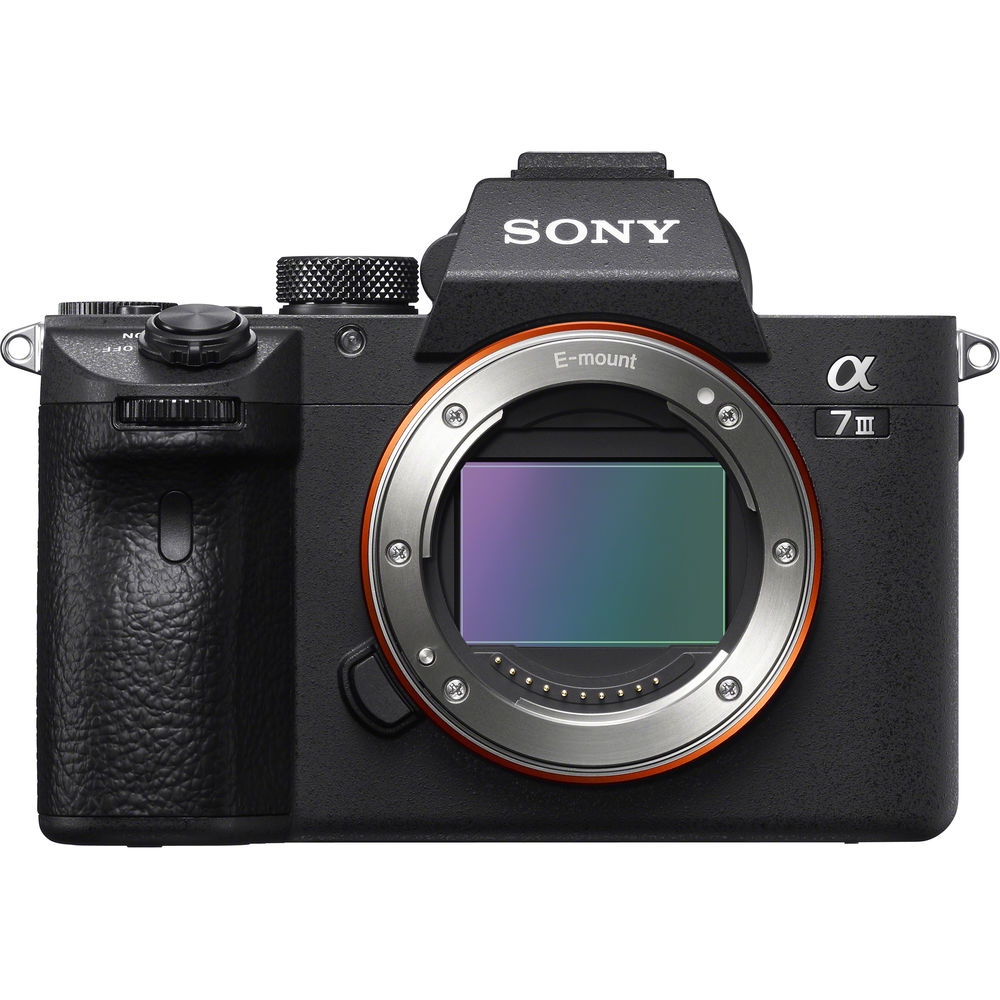 A7 III Sony E A7 III Sony E | |
|---|---|---|
| Overview | ||
| Type | Mirrorless | Mirrorless |
| Format | 35.9 x 23.9 mm full-frame/FX-format | full frame |
| Lens mount | Nikon Z | Sony E |
| Released | 2025 | —, not published |
| Sensor & Image | ||
| Sensor type | CMOS | 35 mm full frame (35.6 × 23.8 mm), Exmor R® CMOS sensor |
| Sensor size | 35.9 x 23.9 mm full-frame/FX-format | full frame |
| Resolution (MP) | 24.5 | 24.2 |
| In-body stabilisation | —, not published | 5.0 stops |
| ISO range | ISO 100 (expandable to Lo 1/Hi 2, 50-204800 equivalent) | ISO 100-51200 (stills) |
| Autofocus & Speed | ||
| AF system | Hybrid phase-detection/contrast AF with AF assist; AF-A focus mode | 693-point phase-detection AF (35 mm full frame); Fast Hybrid AF (phase-detection AF/contrast-detection AF) |
| Subject detection | 273 focus points (single-point); 299 (auto-area); detection range -10 to +19 EV | Human eye (Eye AF) |
| Burst — mechanical | Approx. 7.8 fps | 10 fps (Hi+) |
| Burst — electronic | Approx. 15 fps (silent mode on); up to 30 fps electronic shutter mode | —, not published |
| Video | ||
| Max video | 4K UHD (3840x2160) 60p | 4K 30p (3840 x 2160, XAVC S, 100 Mbps) |
| Codecs / sampling | N-RAW (12-bit), H.265/HEVC, H.264/AVC | XAVC S, AVCHD (MPEG-4 AVC/H.264) |
| Recording limit | —, not published | Approx. 29 minutes (continuous movie recording limit) |
| Viewfinder & Screen | ||
| EVF resolution | 0.5-in. (1.27-cm), approx. 3690k-dot OLED | 2,359,296 dots |
| EVF magnification | Approx. 0.8x | approx. 0.78x |
| Rear screen | 3.2-in. (8-cm), approx. 2100k-dot vari-angle TFT touchscreen | 2.95 inch (3.0-type) wide type TFT, 921,600 dots, tilt up approx. 107 degrees / down approx. 41 degrees, touch panel |
| Body & Handling | ||
| Dimensions (W×H×D) | 134 × 100.5 × 72 mm | 126.9 × 95.6 × 73.7 mm |
| Weight (body) | 700 g | 650 g |
| Weather sealing | Front, back, and top covers made from magnesium alloy delivering dust-and-drip-resistance | Anti-Dust System: Charge protection coating on optical filter and image sensor shift mechanism |
| Shutter durability | —, not published | —, not published |
| Power & Storage | ||
| Battery life (CIPA) | Approx. 330 shots (viewfinder, energy saving off); approx. 350 shots (monitor, energy saving off); up to 380/390 with energy saving on | Approx. 610 shots (Viewfinder) / approx. 710 shots (LCD monitor) (CIPA standard) |
| Battery | EN-EL15c | NP-FZ100 |
| Card slots | Dual SD UHS-II slots | 2 slots: SLOT1 SD (UHS-I/II compliant); SLOT2 Multi slot for Memory Stick Duo/SD (UHS-I compliant) |
| Connectivity | ||
| USB | USB Type-C (SuperSpeed USB) | USB Type-C Terminal (SuperSpeed USB (USB 3.1 Gen 1) compatible); Multi/Micro USB Terminal |
| Wireless | Wi-Fi IEEE 802.11b/g/n/a/ac; Bluetooth 5.0 | Wi-Fi Compatible, IEEE 802.11b/g/n (2.4 GHz band); Bluetooth Standard Ver. 4.1 (2.4 GHz band) |
| HDMI | Type D HDMI connector | HDMI micro connector (Type-D) |
| Price | ||
| Launch price | $1,699.95 (body only) | $1,999.99 (body only, USD; listed as "Original Price" on electronics.sony.com product page) |
| Size, to scale | ||
Front view, drawn at the same scale from each maker's published W×H (mm). | ||
| Smallest bag that fits | ||
| Body + standard zoom | Think Tank Retrospective 4 V2.0 Fits with 24-120 f/4 · View at B&H Photo Video | Think Tank Mirrorless Mover 25 V2 Fits with 24-105 f/4 · View at B&H Photo Video |
Sources
“35.9 x 23.9 mm CMOS sensor (full-frame/FX-format), effective pixels 24.5 million; mechanical shutter approx. 7.8 fps, electronic/extended approx. 15 fps; monitor 8-cm/3.2-in., approx. 2100k-dot vari-angle TFT.”
“Compensation Effect 5.0 stops (based on CIPA standard. Pitch/yaw shake only. With Planar T* FE 50mm F1.4 ZA lens mounted. Long exposure NR off.) TYPE Image Sensor-Shift mechanism with 5-axis compensation (compensation depends on lens specifications)”
Spec values are the manufacturers' published figures, compared factually — we don't rank cameras. Fit verdicts are planning estimates from published interior dimensions, not guarantees. See methodology.
Feedback
Did this page help?
One tap tells us whether this fit page is useful.